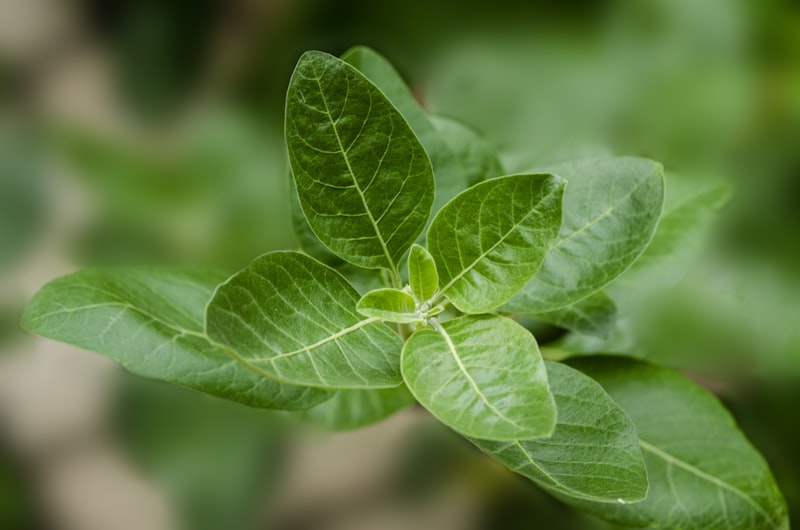
The tradition
Ashwagandha appears in the Charaka Samhita, one of the foundational texts of Ayurvedic medicine, as a primary rasayana, the class of preparations devoted not to treating acute illness but to rebuilding the body over time. The rasayana tradition is concerned with rejuvenation: restoring what overwork, illness, grief, or age has depleted. Ashwagandha sat at the centre of this tradition. Practitioners prescribed it for debility, nervous exhaustion, chronic insomnia, and for what the texts described as a loss of vitality: the condition of a person running on less than they had. Its Sanskrit name, combining ashwa (horse) and gandha (smell), reflects the quality the herb was said to confer: the deep, settled strength of an animal that carries great weight without apparent effort.
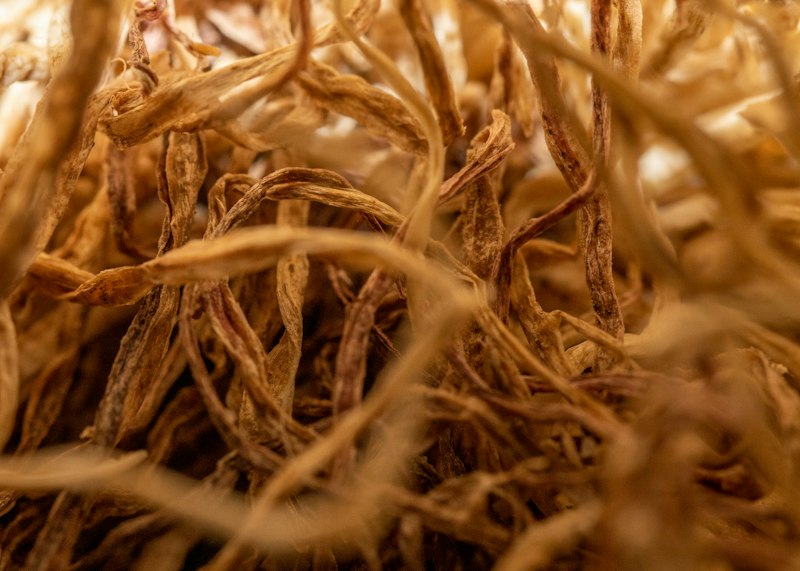
Unlike stimulating herbs that push the system to perform, ashwagandha was understood as a building herb. Its primary medicine was the root, dried and ground to a fine powder, which practitioners blended with warm milk, ghee, and honey for nightly use. The logic was one of accumulation rather than acceleration: taken consistently over weeks and months, it was expected to restore what had been worn away. This same restorative character made ashwagandha a reproductive tonic for both men and women, used not to stimulate, but to replenish the reserves from which vitality and sexual energy flow.
"There is a different kind of strength than the one you feel immediately. Ashwagandha has always been about the other kind."
What the research shows
The active compounds in ashwagandha are primarily withanolides: a class of steroidal lactones found in highest concentration in the root. Modern research has focused largely on their effects on the hypothalamic-pituitary-adrenal axis, which governs the body's cortisol response to prolonged stress. Withanolide-standardised root extracts have become the benchmark for clinical study, offering controlled and reproducible doses that traditional preparations could not guarantee. The broader research model is the adaptogenic framework: the idea that certain compounds help the body modulate its physiological response to sustained demand rather than simply masking symptoms.
The most consistent findings concern stress and sleep. A number of well-designed randomised controlled trials, conducted primarily from the 2010s onward, found statistically significant reductions in serum cortisol and in self-reported stress and anxiety scores among adults taking standardised ashwagandha root extract over eight to twelve weeks. Sleep quality and sleep onset have also shown measurable improvement across multiple trials, a finding consistent with the herb's traditional use as a nighttime restorative. These anxiety and sleep findings are among the best-replicated in the current body of research.
Additional trials have examined ashwagandha's effects on physical performance, reproductive health, and cognition. Some controlled studies have reported improvements in muscular strength, endurance, and recovery, alongside modest increases in testosterone levels in men, over comparable trial durations. Preliminary data also point to possible effects on thyroid hormone levels and on cognitive measures including memory and processing speed. This evidence is genuinely interesting, but the trials remain smaller and shorter than the established record for herbs such as ginger, and independent replication is still accumulating. The honest summary is that the cortisol and sleep findings are robust; the physical and cognitive findings merit attention and further study.
The chakra connection
Ashwagandha's most immediate correspondence is with the root chakra, muladhara, the centre of groundedness, physical safety, and the felt sense of being settled in a body. The root chakra governs the relationship between a person and the earth beneath them: stability, belonging, the basic experience of being held rather than adrift. The anxious, depleted, ungrounded state (wired but exhausted, scattered but unable to rest) is a signature pattern of root chakra depletion, and it maps directly onto the Ayurvedic picture of vata excess. Ashwagandha's grounding, calming action addresses exactly this pattern. It does not sedate. It settles.
The sacral chakra (svadhisthana) governs vitality, creative energy, and the reproductive and sexual life-force. Its quality is flow: the movement of energy through a body that has enough in reserve to give. Ashwagandha's long history as a reproductive tonic for both men and women places it firmly in this territory. Ayurvedic practitioners used it to restore what they called ojas: a subtle essence of vitality understood as the foundation of physical resilience and sexual energy alike. When reserves are depleted, creative and sexual energy are often the first to go. Ashwagandha works in the same direction the sacral chakra points: restoring what makes flow possible.
At the emotional level, ashwagandha addresses a specific kind of exhaustion: the depletion that comes not from a single crisis but from sustained demand, the person who has been performing under pressure for too long, who is tired in a way that sleep alone does not fix. This is not the energised, agitated fatigue that calls for stimulation. It is the collapsed, low-reserve state that calls for rebuilding. The distinction matters. Ashwagandha does not borrow from the system's remaining reserves. It works to restore them. For that reason, it is most meaningful when the need is not a temporary boost but a genuine restoration of the body's capacity to function with ease.
How to use it
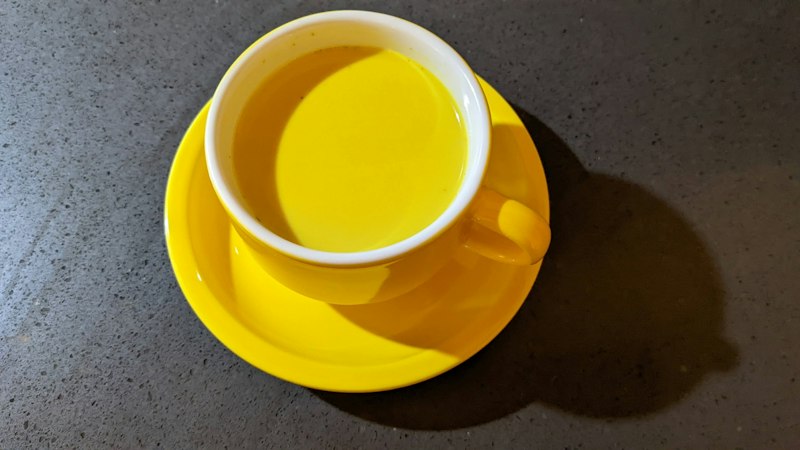
The classical preparation is straightforward: root powder (churna) warmed into full-fat milk or a plant-milk alternative with a small measure of ghee and raw honey, taken in the hour before sleep. This preparation runs through centuries of Ayurvedic writing, and the reasoning has not changed. Warmth aids absorption; fat carries the fat-soluble withanolides; the nighttime timing aligns with the herb's calming, restorative character. Modern wellness culture has adopted a version of this under the name moon milk, often adding cardamom or ground date for sweetness. The traditional preparation remains the most logical form for anyone seeking sleep support and gradual restoration.
Standardised root extracts in capsule form are the format used in clinical trials, and they offer reliable dosing for those managing specific concerns such as elevated stress or poor sleep onset. Typical trial doses range from 300 to 600 milligrams of withanolide-standardised extract daily. The essential principle with adaptogens is consistency: ashwagandha builds its effect over weeks, not hours. It is not an acute remedy. A person expecting results within a day or two is working against the logic of how the herb functions. A person who takes it steadily for six to eight weeks is working with it.
Ashwagandha pairs naturally with warming, nourishing companions: ghee, warm milk, cardamom, soft dates. These are not decorative additions. They reflect a coherent nutritive philosophy in which the herb is delivered as part of a small act of nourishment rather than swallowed as an afterthought. As an evening herb, ashwagandha suits the rhythm of winding down rather than starting up. Those accustomed to reaching for stimulants when depleted may find the shift in logic useful: rather than pushing the system harder, the intention is to put something back.
⚠ Generally well tolerated. Avoid during pregnancy. Use caution alongside thyroid medication, sedatives, or immunosuppressants, and consult a clinician if you have an autoimmune thyroid condition. Rare cases of liver injury at high doses have been reported.
Ashwagandha is one of the sacred herbs in Root to Crown's Sacred Kitchen.
Find every sacred spice and herb mapped to your chakra, with smoke-point-rated oils and a personalised For My Chakra guide that shows you exactly what to cook with for your active protocol.
Download Root to Crown